Hidden Gems In Manchester You Can See For Free
The overlooked free spots in Manchester, from a Tudor hall in Salford to a viaduct garden in the sky, with honest entry conditions for every one.
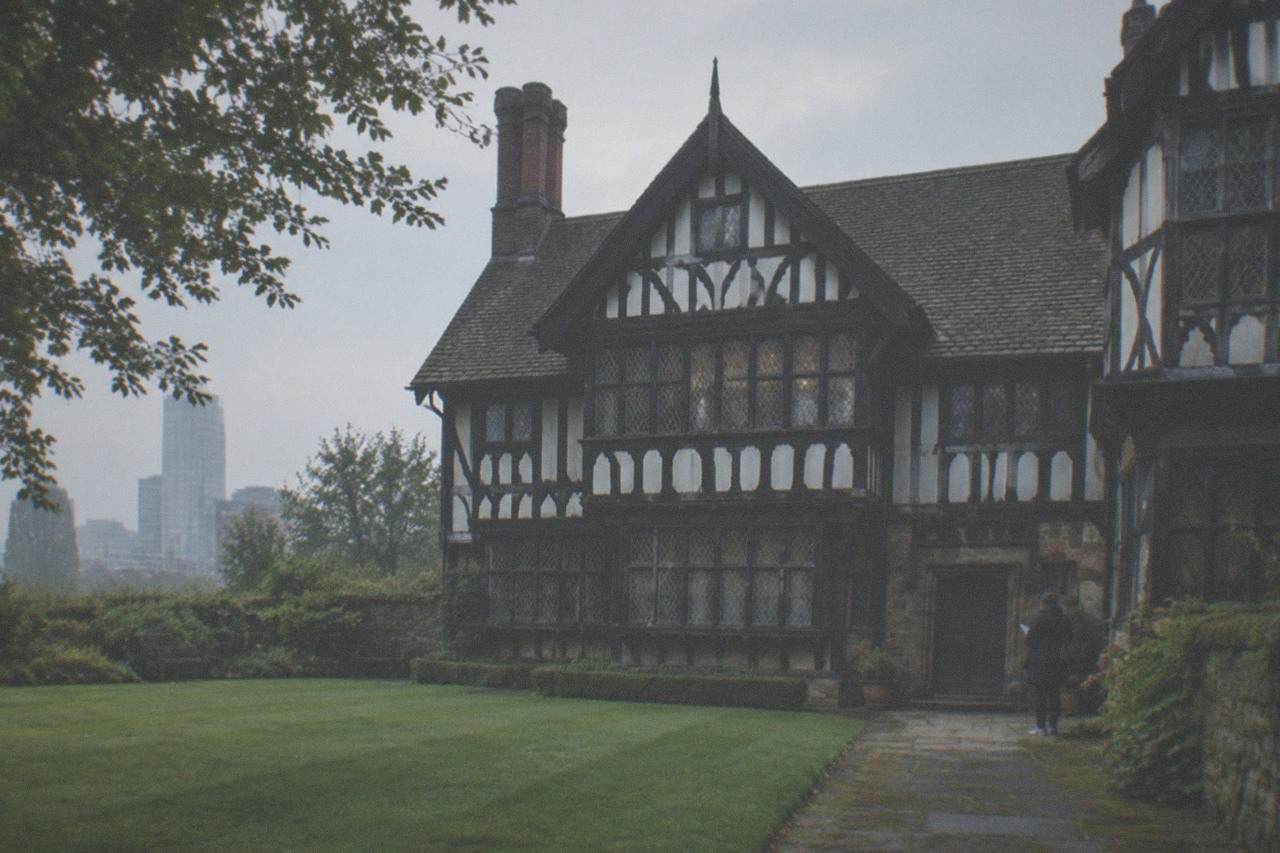
Manchester's genuine hidden gems that cost nothing include Ordsall Hall, a Grade I listed Tudor manor house in Salford that is free to visit, Castlefield Viaduct, a National Trust rooftop garden on an old railway bridge, the Rochdale Canal towpath running past the city's Gay Village, and the Northern Quarter's street art around Stevenson Square. Each has a condition worth knowing before you go, from opening days to ticketed entry, and this guide covers every one of them honestly.
Search results for hidden gems in Manchester usually recycle the same five names: the big museums, the football stadium, the shopping streets. The list below goes the other way. These are the places locals actually mention when a visitor asks what to see beyond the obvious, and every single one costs nothing to enter, with the exact condition attached. Some are a tram ride out of the centre. Others sit within a ten minute walk of Piccadilly Gardens and still get missed by most people passing through.
The point of a hidden gems list that takes free entry seriously is that "free" is doing real work in the sentence. Manchester has attractions with a famous free reputation that are not free at all, and attractions that are free but only on particular days or with a booked ticket. That distinction is the difference between a good day out and standing at a door that will not open. So each entry below carries its condition in the same breath as the claim.
Where Are Manchester's Best Hidden Free Sights?
The short answer is Salford, Castlefield and the canals. The pattern across Manchester's genuinely overlooked free places is that they cluster just outside the retail core, in the older industrial and riverside quarters where land was cheap and history got left behind. Ordsall Hall sits in Salford, a fifteen minute tram ride from the city centre and five centuries older than anything around it. Castlefield's viaduct, canal basins and Roman fort remains sit on the opposite edge of the centre, a ten minute walk from Deansgate. The Rochdale Canal towpath threads between them.
That geography matters. A visitor walking only the Arndale to Deansgate axis will pass plenty of free attractions but almost none of the hidden ones. The table below maps the genuinely overlooked free places by quarter, so a day can be planned around one cluster rather than zigzagging across the city. The distances are short: Ordsall Hall to Castlefield, for example, is a straightforward walk along the waterfront once you are over the Irwell.
| Hidden free sight | Quarter | Nearest transport | The catch |
|---|---|---|---|
| Ordsall Hall | Salford, near Exchange Quay | Exchange Quay tram stop | Closed Fridays and Saturdays |
| Castlefield Viaduct | Castlefield | Deansgate Castlefield tram stop | Open Wednesday to Sunday, 10am to 5pm |
| Rochdale Canal towpath | Gay Village to Ancoats | Canal Street, on foot | None, open public towpath |
| Northern Quarter street art | Northern Quarter | Piccadilly Gardens, on foot | None, public streets |
| Manchester Craft and Design Centre | Northern Quarter | Piccadilly Gardens, on foot | Studios sell goods, browsing is free |
| Victoria Baths | Chorlton-on-Medlock | Barely a mile from Piccadilly Gardens | Welcome Tuesday only, April to September |
A guided walk is the other efficient way to find the offbeat corners a guidebook skips. The city's free, pay-what-you-want walking tours are run by independent local guides on GuruWalk, and several of them deliberately route through the lanes and stories the big attractions do not cover.
Of the four featured walks above, the 3-Hour Walking Tour is rated 4.96 out of 5 across 1,276 GuruWalk reviews and covers the central quarter in enough depth to point out details most visitors walk past, while the Radical History Tour, a perfect 5 out of 5 from 23 GuruWalk reviews, concentrates on the overlooked political history that made Manchester genuinely radical. There is also a Standard Free Walking Tour on freetour.com, listed at 9.8 out of 10 across 3,530 reviews, though this site does not link to it.
Is Ordsall Hall Really Free And Worth The Detour?
Yes. Ordsall Hall is a Grade I listed Tudor manor house in Salford that is free to visit, open Monday to Thursday and Sundays, and it is the single most surprising free sight in Greater Manchester. A half-timbered manor with a great hall, priest holes and moonstone windows, standing in its own gardens five minutes from a tram stop, is not what most visitors expect from the city's industrial outskirts. Its documented history runs back over 750 years, and the building has been a family home, a working farm's centrepiece, a clergy training college and a boxing club before its restoration.
The hall's free entry carries one real condition: it is closed on Fridays and Saturdays. That single fact is the difference between planning the trip and wasting it, because the building sits behind its gates when shut and there is nothing else around it. Sunday afternoons are often the quietest time to have the great hall, with its timber roof and late medieval carved screens, more or less to yourself. The grounds are a pleasant pocket of green regardless of the opening days, and the Star Chamber's wall paintings, rediscovered under later plaster, are the interior highlight.
The reason Ordsall Hall qualifies as hidden rather than merely out-of-town is that it sits in the shadow of the Lowry and MediaCityUK, which soak up the waterfront traffic. Visitors who make the trip to Salford Quays for the free galleries at The Lowry routinely pass within a few hundred metres without knowing the hall exists. Combining the two makes an unusually rich free day: morning in the Quays, afternoon in the Tudor great hall, and the tram back.
What Is Castlefield Viaduct And How Do You Get Up There?
Castlefield Viaduct is a 33 metre high, 330 metre long steel railway viaduct from 1892 that the National Trust has turned into a rooftop park and garden, and entry is free with walk-up access during its current phase, Wednesday to Sunday, 10am to 5pm. It is the clearest example of hidden Manchester hiding in plain sight: the structure looms over Castlefield's canal basins, and thousands of people pass beneath it weekly, but the planted deck above is invisible from the street until you are on it.
The story is worth knowing because it explains the garden's shape. When the Trust reopened the viaduct in 2022 as a "sky garden," it was an experiment in whether a piece of dead industrial infrastructure could carry planting, volunteer-run beds and community plots. The experiment worked and the garden has continued, with wildflower areas, ferns colonising the steelwork, and framed views down into the Roman fort remains and the canal basins below. The deck gives the best free vantage point in Manchester for watching the Beetham Tower skyline against Castlefield's brick warehouses.
The current phase is walk-up with no advance booking needed, which removes the one obstacle that deters casual visitors. That phase could change as the project develops, so if a specific day matters to the plan, the National Trust's own visiting page is the place to confirm before travelling. The viaduct, the Roman fort area of Castlefield, the canal basins and both major towpaths are all free public space, so Castlefield as a whole is a hidden gem district rather than a single sight, and it repays an aimless hour better than most paid attractions.
Which Canal Walks Are Free And Genuinely Overlooked?
The Rochdale Canal towpath through central Manchester is a free public right of way that runs from the Castlefield basins through the Gay Village to Piccadilly and beyond toward Ancoats, and it is the city's most underrated walk. The Bridgewater Canal towpath at Castlefield is free as well, and the two together mean a visitor can walk water all day without spending anything. The Rochdale's stretch along Canal Street is the remarkable one: a working canal with narrowboats, passing directly beneath the Gay Village's bars and the universities' brick terraces, with the industrial lock gates still turning.
The towpath's hidden quality comes from being below street level. Shoppers on Portland Street have no idea that a canal with moored boats runs parallel to them, one block down. Walking the towpath from Castlefield to Piccadilly Basin takes in locks, roving bridges and the abrupt collision of Victorian industry with apartment conversions, then spills out at the converted warehouses and water spaces of Ancoats, where the Rochdale meets the Ashton Canal and some of Manchester's best independent food sits beside the water.
For a hidden itinerary, the strong pairing is the Castlefield loop: Bridgewater Canal towpath along the basin, up to the viaduct deck, then down to the Rochdale for the stretch back toward the centre. The route is flat, entirely free, and passes three layers of Manchester history, Roman, canal-age and railway-age, inside about an hour of walking.
Where Can You See Street Art For Free In Manchester?
The Northern Quarter's street art, concentrated around Stevenson Square, Tib Street and the side streets off Oldham Street, is free and unrestricted to view on public streets, and it is the most changeable free sight in the city. This is not a gallery with fixed opening hours; the walls are repainted as new artists cover old work, which means the Stevenson Square of last year looks different from the Stevenson Square of this year. That turnover is why locals still walk through it regularly, and why a visitor's photograph of a given wall is often the only record of that painting.
The practical way to see it costs nothing and needs no plan: walk the rectangle formed by Oldham Street, Tib Street, Stevenson Square and the back of the Arndale, looking up at the gable ends rather than ahead at the shopfronts. The big commissioned murals sit high on the brick, while the smaller paste-ups and stickers live at street level in the doorways and shutters. Akeley Street and the corner of Hilton Street are reliable spots, and the shutters themselves are painted so the quarter keeps changing appearance between trading hours and closed ones.
The Northern Quarter also holds the Manchester Craft and Design Centre, a Victorian produce market turned studios-and-shops building on the edge of the district, where browsing is free and the individual studios sell their own work at their own prices. Watching ceramicists and jewellers actually making things is free in a way the finished pieces on the shelves are not.
The centre's building alone justifies the visit: it dates from 1873 as the Shambles market hall, and the glass roofed interior survived while the produce trade moved on. It is free to browse the building and its studios, and the distinction between browsing and buying is the honest one here, since nothing on the site is compulsory to purchase.
Is Victoria Baths Free To Visit?
Victoria Baths is free only through its Welcome Tuesday scheme, 11am to 3pm April to September with last entry around 2:30pm, on a pay-what-you-can donation basis; outside that window, casual access does not exist and the paid Discover Victoria Baths tour costs £10. It is Manchester's single most misunderstood attraction on the free question, because its fame as the "water palace" invites the assumption that a building this celebrated must simply open its doors.
The building deserves the fame. Opened in 1906 as a swimming and bathing complex for the Ardwick area, it is packed with stained glass, tiled floors, ornamental terra cotta and three pools, including the first in Manchester with aerated water. One pool, the Gala pool's former First Class section, sits behind the changing cubicles like a cathedral with a shallow end. The Turkish baths' tiled rooms are among the finest interiors of their kind anywhere in the country. It won the first BBC Restoration series in 2003, which paid for the roof, and restoration has continued piecemeal since.
For a free visit, the calendar is the whole plan. Welcome Tuesday runs only through the April to September months and only on the middle of the day, so an autumn or winter trip to Manchester cannot see the Baths for free at all. A summer trip can, and the pay-what-you-can basis means the donation is genuinely optional rather than a polite surcharge. Anyone visiting outside the scheme who wants the interior will need the £10 guided tour instead.
The wider lesson of Victoria Baths is the one that runs through this whole guide: Manchester's most atmospheric free places tend to be the ones with a schedule. The walk-in-anytime category, parks and towpaths and street art, is genuinely unrestricted. The buildings, with a few exceptions like the John Rylands Research Institute and Library, tend to have days and hours attached, and checking them is the difference.
Which Free Libraries And Reading Rooms Can Anyone Walk Into?
The John Rylands Research Institute and Library on Deansgate is free with no booking required, and its Victorian Gothic reading room is one of the most extraordinary free interiors in Britain. The building looks like a cathedral for books, which was its architect's precise intention, commissioned by Enriqueta Rylands in memory of her husband and opened in 1900. The stone, the arched windows and the atmospheric main hall make it the strongest candidate in the city for a sight that is both completely free and completely overlooked by visitors who assume libraries are not sights.
Queuing is possible at busy times, and that is the only condition on entry. The collection holds early printed books and manuscripts, including a fragment of the oldest known New Testament text, and the exhibition space off the main hall changes through the year. Photography in the historic reading room is permitted within reason, which for many visitors is the point of the trip. The John Rylands sits on Deansgate, a street every visitor walks anyway, and entry is through a modest door into a dark corridor that erupts into the hall, so the surprise is structural.
Manchester Central Library is the other free interior worth the walk, with the domed reading room under its rotunda, and free entry to the building and reading rooms, with a free library card available to anyone with proof of address. The Portico Library on Mosley Street, meanwhile, is a distinct case: its library room, exhibitions, café and bookshop are free entry to all, while its guided tours are paid at £6 a head. It is covered again in the closing round-up below.
What Free Sights Are Close To Manchester's Big Paid Attractions?
The useful hidden gems are the ones that slot into a day already planned around the famous sights, because the detour is minutes rather than hours. A visitor heading to the Science and Industry Museum in Castlefield is, without knowing it, walking past the viaduct, the Roman fort remains and two free towpaths. A visitor at the National Football Museum, which is free only for Manchester City Council residents with M postcodes and proof of address, and £15 online or £17 walk-up for everyone else, is two streets from the Cathedral Gardens and the Medieval Quarter's free corners. A visitor at Old Trafford or the Etihad for a stadium tour, both paid products, is near enough to the Bridgewater or Ashton towpath routes to walk the water instead for nothing.
The honest framing of these pairings is that Manchester's free layer is not an alternative to the famous layer, it is the same geography. The table below lists the big draws and the free hidden sight nearest to each, so a day can be extended without re-planning it.
| If you are visiting | The free hidden gem nearby | Condition on the free sight |
|---|---|---|
| Science and Industry Museum | Castlefield Viaduct | Wed to Sun, 10am to 5pm, walk-up |
| Science and Industry Museum | Rochdale Canal towpath from Castlefield | None, public towpath |
| National Football Museum | Exchange Square and Cathedral Gardens | None, public space |
| National Football Museum | Manchester Cathedral | Free entry, £5 suggested donation |
| The Lowry galleries, Salford | Ordsall Hall | Closed Fri and Sat |
| The Lowry galleries, Salford | Salford Quays and MediaCityUK waterfront | None, public realm |
| Manchester Christmas Markets, in season | Northern Quarter street art, five minutes north | None, public streets |
| Old Trafford stadium tour, paid | Bridgewater Canal towpath at Castlefield | None, public towpath |
Two entries in that table deserve their caution spelled out rather than hidden in a cell. The Science and Industry Museum's general admission is free but a free timed ticket must be booked online in advance, and its special exhibitions and the Power Up experience cost extra. The National Football Museum's resident-only free tier catches out visitors constantly, and the £15 to £17 adult charge applies to most of the people reading a free-things list, so it is an honest near-miss rather than a gem.
Are Manchester's Free Walking Tours Actually Free?
Manchester's walking tours are pay-what-you-want, which means the walk itself costs nothing and you tip the guide at the end what you think it was worth, and the city's entire inventory is six walks: five on GuruWalk and one on freetour.com. This is a genuinely free model, not a discount or a trial, and it is the reason a hidden-gems hunt and a free tour overlap so neatly: the guides on these walks make their living from tips, and pointing out overlooked corners is the product.
The four featured English walks each suit a different visitor. The 3-Hour Walking Tour, rated 4.96 out of 5 across 1,276 GuruWalk reviews, runs three hours from Sackville Park and is the deepest central dive. The World-Famous Dog Salchicha Tour, 4.96 out of 5 across 271 GuruWalk reviews, is guided by a dog famous in his own right and runs in English and Spanish. The BBC And Sidemen Tour, 4.8 out of 5 across 256 GuruWalk reviews, leans on the spots made familiar by television. The Radical History Tour, a 5 out of 5 across 23 GuruWalk reviews, is the one that genuinely earns its hidden-gem credentials, telling the Peterloo, suffragette and trade union stories the standard tours skip. The Express Tour in Spanish, 4.87 out of 5 across 39 GuruWalk reviews, runs Spanish only. And the Standard Free Walking Tour on freetour.com, listed at 9.8 out of 10 across 3,530 reviews on that platform's ten-point scale, is described here without a link while its referral status is reviewed.
For a Spanish-speaking visitor the two-Spanish-language options matter, since the Express Tour is the only dedicated Spanish-language walk in the city. For everyone else, the choice is really between depth and angle: three hours of everything, or two and a half hours of the radical history most visitors have never heard connected to Manchester's buildings.
What Should A Free Hidden Gems Day In Manchester Look Like?
A practical day built entirely from this list, with the conditions already accounted for, looks something like this. Start at the John Rylands on Deansgate when it opens, when the reading room is quietest and the light through the clerestory is at its best. Walk south down Deansgate to Castlefield, up onto the viaduct for the rooftop garden, then down through the Roman fort area to the canal basins and the Bridgewater towpath. Follow the water to where the Rochdale Canal heads back northeast, and take the towpath through the Gay Village to Piccadilly Basin, which lands you at the edge of the Northern Quarter with its street art, the Craft and Design Centre and the best inexpensive food streets in the city.
On a Monday to Thursday or a Sunday, insert Ordsall Hall at the Castlefield end by tram from Exchange Quay, and do not attempt it on a Friday or Saturday when it is closed. From April to September, a Tuesday visitor can extend the day to Victoria Baths, which is barely a mile southeast of Piccadilly Gardens, for the Welcome Tuesday opening between 11am and 3pm, remembering the roughly 2:30pm last entry. In the winter months the Baths drop off the free itinerary entirely, and the day leans harder on the unrestricted layer: parks, towpaths, the library interiors and the galleries that need no ticket, like the Manchester Art Gallery and the Whitworth.
Two omissions from this plan are deliberate. Manchester Town Hall is on every older hidden-gems list in Britain and has been closed to the public since 2018, so it is not a sight of any kind at present. Chetham's Library, the other great name, is paid-tours-only at £6.50 to £15.50, with no free walk-in browsing, so on a strictly free itinerary it is out. Both appear in the closing round-up below so the free question about each is answered plainly.
Common Questions
Is The National Football Museum Free In Manchester?
The National Football Museum is free only for Manchester City Council residents with M postcodes and proof of ID or address. Everyone else pays, with adult tickets at £15 online or £17 walk-up. Visitors from outside the city should treat it as a paid attraction rather than a free one.
Can You Go Inside Manchester Town Hall?
No. Manchester Town Hall has been closed to the public since 2018 for restoration work. The council has signalled a phased reopening targeted around spring 2027, including a planned free public attraction inside, but no confirmed reopening date exists as of late 2026, so it should not be treated as a sight you can see.
Is Chetham's Library Free To Visit?
Chetham's Library is not free. All visitor access is by a pre-booked guided tour priced between £6.50 and £15.50 depending on the tour type, and there is no free walk-in browsing of any kind. It is one of the most commonly miscategorised attractions in Manchester guides.
Do The Free Walking Tours In Manchester Really Cost Nothing?
The walking tours listed on GuruWalk in Manchester are pay-what-you-want, so there is no upfront charge and the guide is tipped at the end based on what you felt the walk was worth. The city's total inventory is six free tours: five on GuruWalk and one on freetour.com, of which four run in English and one, the Express Tour, runs in Spanish only.
Is Victoria Baths Free To Go Into?
Victoria Baths is free only through its Welcome Tuesday openings, 11am to 3pm April to September with last entry around 2:30pm, on a pay-what-you-can donation basis. The rest of the time there is no casual access, and the guided Discover Victoria Baths tour costs £10.
What Is The Best Hidden Free Thing To Do In Manchester?
Ordsall Hall is the strongest answer for most visitors: a Grade I listed Tudor manor house, free to enter, open Monday to Thursday and Sundays, a short tram ride from the centre. The Castlefield Viaduct rooftop garden and the Rochdale Canal towpath run it close, and both can be combined with Ordsall Hall into one free day.