Northern Quarter Street Art: A Free Self-Guided Route
Manchester's densest concentration of street art sits in and around the Northern Quarter, on public streets that cost nothing to walk.
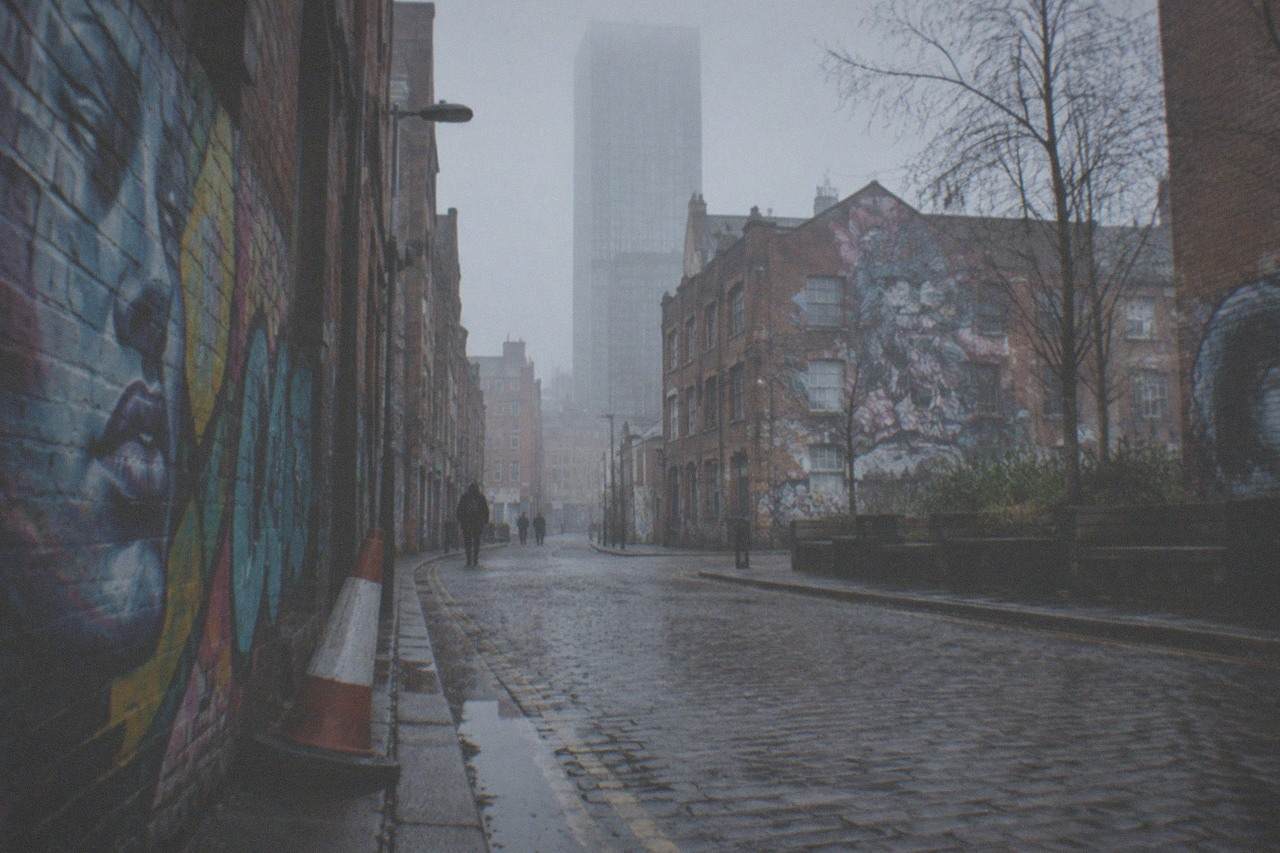
Short answer
The Northern Quarter's street art is on public streets, visible free at any time, and a self-guided loop around Stevenson Square, Oldham Street and the surrounding blocks takes in the densest stretch of murals in Manchester.
Manchester's densest concentration of street art sits in and around the Northern Quarter, on public streets that cost nothing to walk.
Manchester's Northern Quarter street art is free to see at any time, on public walls around Stevenson Square, Oldham Street, Tib Street and the surrounding blocks, and a self-guided walking loop can take in the best of it without a ticket, a booking or a guide. The murals change as artists repaint walls, so the route below is a framework of places rather than a fixed list of paintings.
The Northern Quarter is the part of central Manchester where the city's independent character is most visible. Record shops, bars and small studios occupy former textile warehouses, and the brick walls between them carry layers of commissioned murals, paste-ups and painted shutters. The art is on public streets, free and unrestricted to view, which makes it one of the few genuinely free things to do in Manchester that needs no planning at all.
| Stop on the Route | What You Will See | Access |
|---|---|---|
| Stevenson Square | The best-known mural walls in Manchester, repainted regularly | Public square, free at any time |
| Oldham Street and Oldham Street South | Painted shutters, bar and shopfront murals | Public street, free |
| Tib Street and Tib Lane | Smaller walls, shutters and paste-ups | Public street, free |
| Afflecks and Church Street surrounds | Building-side murals near the independent market | Public streets, free |
| Thomas Street and Edge Street | Mixed commercial and independent mural work | Public streets, free |
A route like this rewards a second visit. Walls get repainted, new pieces appear overnight, and a corner that looked plain one month can carry a full mural the next. Treat the map in your head as a set of streets worth walking slowly, not a checklist.
For anyone who would rather have a local guide explain what they are looking at, Manchester has a small but strong set of free, pay-what-you-want walking tours, several of which pass directly through this neighbourhood. The walks below are run by independent guides on the GuruWalk platform, not by this site, and the price is simply pay what you want at the end.
Where Is The Northern Quarter Street Art In Manchester?
The Northern Quarter sits immediately north and east of Piccadilly Gardens in central Manchester, and its street art is spread across roughly a dozen streets, with Stevenson Square, Oldham Street and Tib Street forming the core. Everything is reachable on foot from the city's main transport hubs.
The neighbourhood's boundaries are loosely drawn. Most people would place it between Piccadilly Gardens to the south, the Ancoats side of Great Ancoats Street to the east, and the Shudehill and Victoria station side to the north. Within that block, the painted walls cluster around Stevenson Square and the streets that radiate from it: Oldham Street running north, Thomas Street running parallel, Tib Street angling toward Shudehill, and the smaller lanes and arcades in between.
There is no single building that "contains" the art. That is the point, and it is why the experience costs nothing. The murals belong to the streets. Some are commissioned by bars and venues who want a strong wall facing the road; others are painted on shutters so the artwork only appears when the shop is closed; a few sit on gable ends several storeys up, placed there because a big wall with a long sightline is the most valuable real estate in street art.
Visitors arriving by tram can step off at Piccadilly Gardens or Market Street and be among the first painted shutters within a short walk. Arrival by train at Manchester Victoria puts the walker at the northern edge of the neighbourhood, near Tib Street. Either way, the route below is a loop that can be entered at any point, walked in either direction, and adapted to however much time is available.
What Makes The Northern Quarter The Centre Of Manchester Street Art?
The Northern Quarter became Manchester's street art hub because its independent venues wanted painted walls, its older brick buildings offered large, visible surfaces, and the city's creative community clustered there from the 1990s onward.
The story is partly economic. As textile trade moved out of central Manchester in the late twentieth century, the warehouse district between Piccadilly and Shudehill became cheap space. Bars, record shops and studios moved in. A neighbourhood with that many independent operators, all competing for attention on foot traffic alone, is exactly the kind of place where painted exteriors start multiplying. A venue that commissions a striking wall gains a landmark; a landmark draws people past the door.
The buildings themselves matter too. Victorian and Edwardian brick, with wide gable ends and long strips of shutter frontage, are good canvases. Street art in Manchester is rarely on glass or modern cladding; it is on brick and steel, and the Northern Quarter has that in quantity.
The creative community sealed it. Manchester has a long tradition of music, print culture and the visual arts, and the Northern Quarter became the district where those scenes lived alongside each other. Artists painting walls, studios printing posters and venues hosting live music formed a loop in which each fed the others. The result today is a walkable density of art that few British city centres match.
It is worth saying plainly that this is not a museum, and that is not a euphemism. There are no walls behind ticket desks and no rope lines. The paintings weather, fade, get tagged over and get replaced. The district works as a free attraction precisely because it is a living, working commercial neighbourhood that happens to be covered in art.
What Is The Stevenson Square Murals Scene?
Stevenson Square is the single best-known street art location in Manchester, a small public square at the heart of the Northern Quarter whose surrounding walls are repainted on a rolling basis, so the artwork changes from year to year and sometimes month to month.
The square sits at the junction of Oldham Street and the streets around it, and it functions as the neighbourhood's open-air gallery. Gable walls, hoardings and shutter fronts facing the square have carried some of the most photographed murals in the city. Because the walls are actively managed, what stands there during one visit may not survive to the next, and the square has a reputation for turning over high-profile work faster than anywhere else in Manchester.
The practical implication for a self-guided walker is freedom. A visitor does not need to chase a specific mural they saw in a photograph from two years ago, because it may already be gone. The square itself is the destination. Arriving with that expectation turns the visit from a treasure hunt into a genuine wander.
Stevenson Square is also a functioning social space. Benches, café fronts and bar terraces surround it, and at most hours of the day the square holds as many people sitting as walking. The art and the street life are the same scene. Photographers get their clearest walls in the morning, before the terraces fill and before traffic dominates the frame, but the square never closes and there is no wrong time of day to stand in the middle of it and look up.
How Do You Walk A Free Self-Guided Street Art Route?
A practical self-guided route starts at Stevenson Square, works north along Oldham Street to Thomas Street and Tib Street, loops through the Church Street and Afflecks blocks, and returns to the square, and the whole loop can be walked at whatever pace suits, with no fixed start point, ticket or time limit.
The route works as a loop with Stevenson Square as the anchor, but it can be entered anywhere. A sensible walking order, from the square northward, is set out below. No stage requires transport of any kind, and the only costs are the ones a walker chooses, such as coffee or a vinyl record along the way.
| Stage | Streets and Spaces | What to Look For |
|---|---|---|
| 1 | Stevenson Square | Gable-end murals, hoardings, painted shutters facing the square |
| 2 | Oldham Street heading north | Bar and shopfront murals, upper-storey painted panels |
| 3 | Thomas Street and Edge Street | Independent venue walls, smaller commissioned pieces |
| 4 | Tib Street and Tib Lane | Shutter art, paste-ups, lanework between buildings |
| 5 | Church Street and the Afflecks block | Large building-side murals near the independent market |
| 6 | Return via Piccadilly Gardens edge | Street-facing walls on the southern approach back to the square |
A few notes on how to walk it. First, look up: several of the biggest pieces are above street level, and the ground floor is often the least interesting. Second, walk the shutters early or late: on streets where shops close, painted shutters are effectively a second gallery that only exists outside trading hours. Third, take the side streets seriously: the smaller lanes off Oldham Street and Tib Street hold paste-ups and small-format work that the main drag does not.
The loop also connects naturally to other free parts of the city. Walked south from Piccadilly Gardens, it leads toward the city's civic core, and walked west it leads toward Deansgate and the Castlefield end of town. Those extensions are covered later in this guide.
How Often Do The Murals Change?
Murals in the Northern Quarter change on a rolling basis, with Stevenson Square in particular known for repainting its walls regularly, so specific artworks should never be promised, and any published photo of a Manchester mural may already be out of date.
This is the single most useful thing to understand before setting out. A street art scene is not a static collection. Walls are repainted, commissions replace older work, pieces fade in the northern rain, and space reopens every time a business changes hands. Stevenson Square's walls have carried successive waves of work over the years, and the turnover is visible in the layers: older paint showing through at the edges, ghost outlines of previous pieces beside the current ones.
For the walker, this has a few consequences. Photographs taken by other people are evidence of what once stood somewhere, not a guarantee of what stands now. Guides and articles that list individual artworks by name go stale fast, which is why this page names streets and squares rather than specific paintings. And the experience is genuinely repeatable: walk the loop twice, a year apart, and it will read as two different galleries.
The turnover is also a defence against disappointment. A visitor who arrives determined to see one particular mural will sometimes find it gone. A visitor who arrives to walk the neighbourhood will always find art, because the walls that host it have not moved. The route's framing is built on the second expectation.
Who Runs The Free Walking Tours That Cover This Neighbourhood?
The free walking tours that pass through the Northern Quarter are run by independent local guides on the GuruWalk platform, each working on a pay-what-you-want basis, and this site carries referrals to those tours but operates none of them.
Manchester's inventory of free walks is small compared with cities like London or Paris: six free, pay-what-you-want walking tours in total across GuruWalk and freetour.com, of which four are featured in card grids on this site. The largest of them, the 3-Hour Walking Tour listed on GuruWalk as Free Manchester Walking Tours, is rated 4.96 out of 5 across 1,276 GuruWalk reviews and meets at Sackville Park, close to the eastern edge of the Northern Quarter. That is the walk most likely to bring a visitor through the painted streets with commentary attached.
| Walk | Platform | Duration | Rating and Scale |
|---|---|---|---|
| 3-Hour Walking Tour | GuruWalk | 3 hours | 4.96 out of 5 across 1,276 GuruWalk reviews |
| World-Famous Dog Salchicha Tour | GuruWalk | 2 hours 15 minutes | 4.96 out of 5 across 271 GuruWalk reviews |
| BBC And Sidemen Tour | GuruWalk | 2 hours | 4.8 out of 5 across 256 GuruWalk reviews |
| Radical History Tour | GuruWalk | 2 hours 30 minutes | 5 out of 5 across 23 GuruWalk reviews |
The other featured walks each bring a different angle. The World-Famous Dog Salchicha Tour, listed on GuruWalk as Must-do Manchester Free Tour with World Famous Dog Salchicha, runs about 2 hours 15 minutes in both English and Spanish and centres on the city's most famous four-legged resident. The BBC And Sidemen Tour, listed on GuruWalk as "#1 Manchester Free Tour - As Seen on BBC & The Sidemen!", runs about 2 hours and leans on the city's media fame. The Radical History Tour, listed as Radical Manchester - How Manchester Changed the World, is rated 5 out of 5 across 23 GuruWalk reviews and digs into the political history that shaped the city.
Two further walks exist but are not featured in card grids here. An Express Tour In Spanish, rated 4.87 out of 5 across 39 GuruWalk reviews, runs in Spanish only. And a Standard Free Walking Tour listed on freetour.com, rated 9.8 out of 10 across 3,530 freetour.com reviews, meets outside the Central Library; this site names it for completeness but does not link to it while its referral terms remain unverified.
A guided walk and a self-guided mural wander are not rivals. The walks explain the city; the self-guided loop lets a visitor linger on the walls that caught their eye. Many people do one on the first day and the other on the second.
What Else Is Free Near The Street Art Route?
Several genuinely free attractions sit within easy reach of the Northern Quarter loop, including the Manchester Craft and Design Centre, Manchester Central Library and a set of free museums and galleries within the wider city centre, and each has its own entry conditions worth knowing in advance.
The nearest of them is the Manchester Craft and Design Centre on the Northern Quarter's northern edge. Housed in a former Victorian fish and poultry market, the centre holds working studios where makers produce and sell ceramics, jewellery, textiles and prints. The building is free to browse, and the studios inside sell their goods at their own prices. It is free to look and the walk between studios doubles as a chance to watch artists at work. The centre's own site carries current studio listings and opening details.
Heading south from the loop, Manchester Central Library sits on St Peter's Square, the city's principal civic space. The library is free to enter, including its reading rooms, and a library card is free to obtain with proof of address. The building's rotunda reading room is one of the most impressive interior spaces in the city centre, and it costs nothing to stand in. The square around it also carries public art and the city's war memorial, making it a natural southern extension of the walk.
Beyond those two, the free museums within reach of the city core include the Manchester Art Gallery, the People's History Museum, the John Rylands Research Institute and Library, the Whitworth, IWM North at Salford Quays, the Lowry galleries and Manchester Museum. Each of those is covered by its own record in this site's directory, and all are free to enter with their conditions stated there. The People's History Museum is a particularly good pairing with the street art walk, because its collection on the history of democracy and protest explains a good deal of the political energy that ends up painted on walls.
Where Does The Route Connect To Castlefield And The Waterways?
Walked west and south from the Northern Quarter, the route connects through the city centre to Castlefield, where Manchester's urban heritage park, reconstructed Roman fort gateway and canal basins are free, open public space at all times.
Castlefield is the other end of the city's free-walking spectrum. Where the Northern Quarter is dense, commercial and loud, Castlefield is quieter, older and green, and the two make a well-matched pair for a full free day out. The urban heritage park around the Roman fort area and the canal basins is open public space, free at all times, with the reconstructed Roman gateway and the basin edges of the Rochdale and Bridgewater canals woven through it.
The connection between the two districts is thematic as much as geographical. Manchester's story runs from Roman settlement to canal trade to industrial city to creative quarter, and a walker who covers both ends of that line in a day has essentially walked the city's biography without spending anything. The Northern Quarter's walls show where the city's creative present lives; Castlefield's basins and viaducts show the industrial and pre-industrial past that made the wealth the present city was built on.
The elevated steel viaduct at Castlefield, now a National Trust-run garden walkway, is also in its current phase free to enter on a walk-up basis, Wednesday to Sunday, 10am to 5pm. It appears again in the closing band of this guide, but it is close enough to the heritage park to plan into the same visit.
When Is The Best Time And Season To See The Murals?
Any time of day or year works for the Northern Quarter's street art, because the walls are permanent and free, but early mornings give the cleanest photographs, closed shutters add a second layer of art outside trading hours, and the Christmas market season adds crowds.
Time of day matters mainly for photography. Morning light strikes the east-facing walls favourably before midday, and the streets are quietest before the bars and shops open, which means fewer cars and fewer people in frame. Mid-afternoon on a weekend brings the district to its liveliest, which some visitors prefer: the terraces are full, the record shops are open and the art sits inside a working street scene rather than an empty one.
Shutter timing is worth a note. A lot of Northern Quarter artwork is painted on roller shutters, so on a weekday morning the "gallery" is closed, in effect, and the same street viewed in the evening or on a Sunday shows completely different surfaces. A dedicated mural hunter may want to see both states of the same street.
Seasonally, there is no bad month. The only major complication is the Christmas market period, when the city centre fills with stalls and crowds. The Christmas Markets themselves are free to enter, with only food, drink and stall purchases costing money, and the 2026 run is scheduled from Friday 6 November to Tuesday 22 December across the central squares including the Exchange Square and Cathedral Gardens sites at the Northern Quarter's edge. Visiting the murals during that window means sharing the district with the market crowds.
How Does Manchester Street Art Connect To The City's Pride And Culture?
Manchester's street art tradition is intertwined with the city's music, nightlife and LGBTQ+ culture, and the annual Manchester Pride parade, free to watch from the public street, brings the same expressive energy through the city centre once a year.
The Northern Quarter sits beside the Gay Village around Canal Street, and the two neighbourhoods have shared artistic traffic for decades. Painted walls in Manchester often carry themes of identity, protest and celebration rather than pure decoration, which is consistent with a city whose cultural exports, from the Haçienda era onward, mixed art and nightlife and politics freely. A mural is a cheap, visible, temporary way for a city to argue with itself, and Manchester has always argued.
The Pride parade itself is the one moment in the civic year when that visual culture takes over the whole city centre at once, and it is free to watch from the public street along the route. It is worth knowing the boundary honestly: the parade is free, but the Gay Village weekend during the festival is fenced and requires a paid wristband, and the current wristband price is not published on this site because it has not been verified. Watching the parade costs nothing; entering the fenced village area does not.
For a visitor whose interest in the murals is partly an interest in the culture that makes them, timing a trip around the August Pride weekend turns a street art walk into something larger. For everyone else, the connection is simply visible in the walls year-round.
What Should You Know Before Photographing The Walls?
Photographing Northern Quarter street art is unrestricted from public streets, and the practical considerations are light, crowds and respect for working businesses, not access rules, since every wall on the route is visible from public pavement.
A few practical points make a photographic walk better. Wide lenses earn their keep: many of the best pieces are tall gable-end murals seen from narrow streets, and a phone's default framing may struggle with the whole wall. Early morning gives the lowest chance of a parked van across the mural, a real and recurring hazard in a commercial district. And the turnover rule from earlier applies again: shoot what is there, because there is no guarantee it survives the season.
The etiquette is ordinary street etiquette. Stand on the pavement, not in the road. Buy something in a café whose wall you have photographed for twenty minutes. And ask before photographing people, particularly anyone sitting on a terrace or working at a market stall, who did not choose to be part of a stranger's composition.
There is also a long-game argument for returning with the same lens in the same spot in a different year. The changeable walls make the Northern Quarter one of the few free attractions in any British city that measurably improves with repeat visits, and serial photographs of the same gable end have a documentary value that a single visit cannot produce.
Is Everything In The Northern Quarter Area Actually Free?
The streets and their art are free, but several of the headline attractions within walking reach of the Northern Quarter are only conditionally free or not free at all, and the conditions matter, because the National Football Museum charges non-residents, Chetham's Library is paid-tours-only, and Manchester Town Hall has been closed since 2018.
This is where honest directories earn their keep. A visitor walking from the murals toward the city's other sights will pass or reach several places whose free reputation is complicated. The table below states the real position for the ones nearest the route.
| Attraction | Real Status |
|---|---|
| National Football Museum | Free only for Manchester City Council residents with M postcodes and proof of ID or address; all other visitors pay |
| Chetham's Library | Not free: all access is by pre-booked paid tour, priced £6.50 to £15.50 |
| Manchester Town Hall | Closed to the public since 2018 for restoration; no free public access currently exists |
| Science and Industry Museum | General admission free, but a free timed ticket must be booked online, and special exhibitions and the Power Up experience are paid separately |
| Victoria Baths | Free only through the Welcome Tuesday openings, 11am to 3pm, April to September, on a donation basis; otherwise paid tours only |
None of that diminishes the street art route, which is free without any qualification. But a day built around the Northern Quarter works best when the genuinely free attractions nearby, the Craft and Design Centre, Central Library, the galleries and the parks, carry the itinerary, and the conditionally free ones are planned deliberately rather than assumed.
For anyone considering Victoria Baths in the same itinerary, the trust's own opening pages state the Welcome Tuesday details and tour booking position directly.
What Makes This Route A Complete Free Day In Manchester?
The self-guided mural loop works as the spine of a full free day because it links naturally to the city's other genuinely free sights: the Craft and Design Centre at its northern edge, Central Library to the south, the free galleries beyond, and the Castlefield waterways at the far western end.
A realistic free day built this way runs in three movements. The morning belongs to the Northern Quarter loop, walked slowly, with the shutters still interesting in either state and the coffee cheap if wanted but never required. The middle of the day moves south through St Peter's Square and Central Library into the free museum quarter, whether that means the People's History Museum, the Manchester Art Gallery or the John Rylands. The afternoon, for a walker with energy left, heads west toward Castlefield, the basins, the heritage park and the viaduct.
Three closing suggestions worth knowing about, all different from the murals and all in the directory: the Free Trade Hall, which is no longer a public venue at all now that it operates as a hotel, Alexandra Park, a free public park south of the centre, and the Castlefield Viaduct with its current free walk-up entry. They make a varied shortlist for a second day or a spare afternoon.
Common Questions About Northern Quarter Street Art
Is The Northern Quarter Street Art Free To See?
Yes, completely free. The murals sit on public streets, visible at any time, with no ticket, booking or opening hours.
The art is not inside any venue. It is painted on the outsides of buildings and shutters around Stevenson Square, Oldham Street, Tib Street and the surrounding blocks, and the pavement in front of it is public. That makes it one of the very few attractions in Manchester with no conditions attached at all.
How Long Does A Self-Guided Street Art Walk Take?
There is no fixed duration, because the route is a set of streets rather than a ticketed attraction, but a slow loop around the core can fill a relaxed morning, and a quick pass of the highlights fits into a spare hour.
The pace is the walker's choice. Someone photographing every wall will spend far longer than someone strolling between cafés. Because the loop can be entered at any point and abandoned at any point, it works equally well as a full activity or as a short walk between two other stops in the centre.
Do The Murals Change Between Visits?
Yes, and quickly in places. Stevenson Square's walls in particular are repainted on a rolling basis, so specific artworks come and go.
This is why this page names streets and squares rather than individual pieces. A mural photographed one year may be replaced the next. Visitors should expect the walls to be a live, changing scene rather than a permanent collection, and should treat repeat visits as genuinely new.
Can A Free Walking Tour Cover The Street Art Too?
Yes. Several of Manchester's free, pay-what-you-want walking tours, run by independent guides on GuruWalk, pass through or near the Northern Quarter, including the 3-Hour Walking Tour rated 4.96 out of 5 across 1,276 GuruWalk reviews.
A guided walk adds history and context that a self-guided wander cannot, and the two approaches stack well. The walks meet at published points around the city centre, including Sackville Park for the largest tour, and this site carries referral links to them without operating any of them itself.
Is The Northern Quarter Safe To Walk?
The Northern Quarter is a busy commercial city-centre district, and the streets around the mural route carry heavy foot traffic through the day and into the evening.
As with any city centre, ordinary urban awareness applies, particularly late at night when the bars are at their busiest. During the day, when most visitors walk the route, the district is one of the most trafficked parts of Manchester. Nothing about the route requires going anywhere secluded; the art is on main streets.
Are The Painted Shutters Only Visible When Shops Are Closed?
Many are, yes. A significant share of Northern Quarter artwork is painted on roller shutters, which means those pieces appear only outside trading hours.
This is a small tactical detail that changes the walk. Early mornings, evenings and Sundays show a second layer of art that a mid-morning visitor never sees. A mural hunter with a camera may want to walk the same street twice, once open and once closed, to catch both galleries.